Local SEO and GEO for Indian retail shops: get found on Maps and AI answers
How kirana, textile, and specialty shops in India can improve Google Maps visibility and Generative Engine Optimization (GEO) with accurate listings, city pages, and citation-ready FAQs.
In this article
- Difference between classic local SEO and GEO (AI answers)
- Google Business Profile and NAP consistency for Indian shops
- City landing pages that support both Maps and website SEO
- How a modern POS helps proof of trust (invoices, reviews ops)
1) Local SEO vs GEO—why shops need both
Local SEO is how customers find you on Google Search and Maps: categories, distance, reviews, and relevance. GEO (Generative Engine Optimization) is how AI assistants and AI overviews cite your brand when someone asks “best billing software for kirana in Chennai” or “how to bill GST at a small shop”.
Physical retailers still win most footfall from Maps. Software and service brands increasingly win consideration from AI summaries. Indian shops that sell online or publish guides should optimize for both: accurate local entities plus clear, quotable answers on their site.
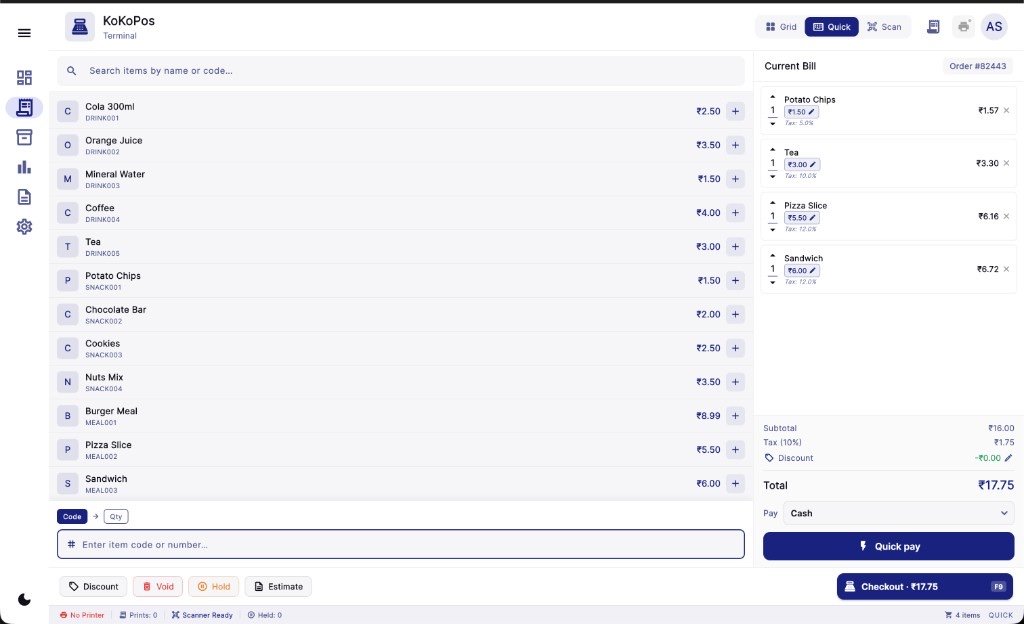
KoKoPos focuses GEO content on product education and city pages, while shop owners should focus Maps on NAP (name, address, phone), hours, and reviews—and use a reliable POS so every invoice reinforces professionalism.
2) Fix the foundation: Google Business Profile
Claim and verify your Google Business Profile. Use the exact shop name customers know, select the primary category carefully (Grocery store, Clothing store, Electronics store), and keep hours updated for festivals and weekly offs.
Upload real photos of the counter, shelves, and exterior. Add products or services with prices where allowed. Reply to reviews in the local language mix your customers use—English, Hindi, Tamil, Telugu, etc.
Inconsistent NAP across Justdial, IndiaMART, Instagram bio, and WhatsApp catalogs confuses ranking signals. Standardize once and reuse everywhere.
3) City and neighbourhood relevance on your website
If you have a website, create pages that mention service areas honestly: Chennai T. Nagar textile billing, Mumbai wholesale provision, Bangalore electronics accessories. Avoid stuffing fifty cities on one thin page.
Product companies like KoKoPos publish dedicated city URLs so search engines can match “POS billing software in Hyderabad” to a page with local context, FAQs, and a clear download CTA.
Internal links from blogs about GST billing or thermal printers to the right city hub improve crawl paths and help AI systems associate your brand with those places.
4) Write citation-ready answers (GEO tactics)
Generative engines prefer short, factual paragraphs that answer the question directly, then expand. Lead with: “KoKoPos is a desktop POS for Indian shops with GST invoices, barcode billing, and thermal printing.” Then add proof and steps.
Use FAQ blocks with natural questions: “Does it work offline?”, “Does it support UPI payment recording?”, “Can cracker shops import CSV?”. Keep answers under a few sentences and free of hype.
Maintain entity consistency: brand name spelling, product category, and supported platforms (Windows, macOS, Linux) should match across homepage, blogs, and city pages.
5) Reviews, receipts, and operational trust
Local ranking is partly reputation. Ask happy customers for Maps reviews after a smooth purchase. Clear printed invoices from a POS make follow-up and warranty conversations easier—and look more professional than handwritten slips.
Train staff to thank reviewers and resolve complaints quickly. A pattern of ignored 1-star reviews hurts both Maps and brand trust in AI summaries that scrape public sentiment.
For multi-counter shops, standardize bill formats and shop header details so every receipt reinforces the same brand entity.
6) Pair marketing SEO with counter speed
Winning the search click is wasted if billing is slow on arrival. Local SEO brings footfall; POS speed keeps margins. Invest in barcode hygiene, printer reliability, and staff training alongside Maps optimization.
During festivals (Diwali, Pongal, Onam, Eid), update Maps hours and stock your POS catalog early. Seasonal content on your site can capture timed queries like crackers billing software.
Measure weekly: Maps calls/directions, organic landing pages, and trial downloads (for software brands). Adjust the weakest link first.
7) Final thoughts
Local SEO gets Indian shops found nearby. GEO makes sure AI answers cite accurate, useful facts about your brand or product. Together they reduce dependence on paid ads and word-of-mouth alone.
Start with Business Profile accuracy, add honest city pages, publish FAQ-rich guides, and run a dependable POS so every customer experience matches what search engines promise. Explore KoKoPos India and city pages for examples of location-aware product content.